3

i 3 Table Of Content

Online Dog Training

Train your dog safely from your home

We are currently offering online video & phone sessions from the comfort of your home. Please note that due to COVID-19 and a commitment to everyone’s health and safety. Online Training is great for dogs who aren’t completely vaccinated or have a tough time in a class setting, whether they are scared or extremely excited of unfamiliar dogs or people.

We use Positive Reinforcement Training Methods

Our Private Coaching and Courses are all developed by the Canine Learning Academy Dog Training Team, who are all  Karen Pryor Academy certified dog trainer. We use Positive reinforcement training. We use toy play, praise and/or treats to reward your dog while learning. Because the reward makes him more likely to repeat the behavior, positive reinforcement is one of your most powerful tools for shaping or changing a dog’s behavior.

We shape your pup into well-mannered members of the family. Online Consultation is the first step for School or Private Training.
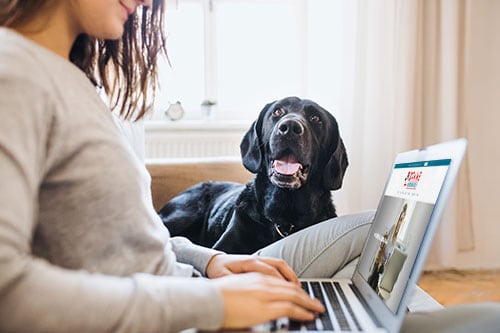
Online Private Training Class

Online Consultations 
Jump into training as soon as possible with our 90 minute Online Consultations. Consultations are required to begin all private and school training programs, but are also an incredibly useful resource for new puppy and dog parents. Whether your puppy is coming home from the breeder soon or you recently welcomed a rescue into your home, our certified trainers will walk you through everything you need to know to be the best dog parent you can be.

First, we’ll review your dog’s behavioral and health history (if available) to make sure we can design a program that fits both your family and your dog just right. During the consultation you and your trainer will dive deep into topics specifically relevant to your puppy or dog, including but not limited to:

  • Potty Training
  • Crate Training
  • Appropriate Play Styles and Handling Skills
  • Socialization and Proactive Exposure
  • Household Setup and Management
  • Daily Mental and Physical Stimulation
  • Building a Routine and Schedule That Fits your Lifestyle
  • Body Language and Stress Signals
  • How Your Puppy/Dog Learns
  • Problem Solving Model for ALL Unwanted Behaviors
  • Introduction to Foundation Behaviors/Skills

Live Online Group Classes

Whether your style is watch and learn or more hands on, we have a group class training option that fits your learning style. This year we launched five premier online group training classes to help people meet their dog and puppy training goals regardless of location, physical limitations, reactivity issues, or vaccination history. Working from your home or a less distracting space has proven to be a big bonus for the dogs because all the pressure is off and the humans can absorb more knowing their pups are stress free and comfortable.

Three of our classes are currently in a webinar format, where the teacher cannot see the students so there’s no pressure to perform; students are welcome to chime in and ask questions live along the way and participate in a group discussion at the end of class. The other two classes are INTERACTIVE coaching formats where you can get instant feedback while working with your dog in front of certified professional dog trainers.

All five of our Online Group Classes are FREE for the month of April!!

Current Schedule of Classes (all times are Pacific Standard Time):

Tuesdays @ 11:00a – Puppy Start Right (Webinar)
Introduction of crucial developmental and socialization information for parents of young puppies. Ideal for puppies 8-20 weeks old.

Tuesdays @ 5:30p – Basic Manners (Webinar)
Canine Learning Academy’s premier All Day Puppy and Dog Training School programs’ curriculum. All levels.

Tuesdays @ 6:30p – Rowdy Rover (Webinar)
Diving deep into reactivity issues from barking and lungeing to hiding and biting, this class addresses all levels of over-reactive behaviors and how to address your dog’s stress signals. All levels.

Thursdays @ 1:00p – Canine Good Citizenship Prep (Interactive)
Get live coaching and step by step directions to achieve the goal of an AKC CGC title. Intermediate Level.

Saturdays @ 10:30a – Tricks Class (Interactive)
Grab your dog and practice super 30+ awesome tricks with the Canine Learning Academy Training Team, featuring Laura Nativo of Nativo Pet Company. Earn your AKC Novice, Intermediate, and/or Advanced Trick Title with our AKC Certified Evaluators. All levels.

Online Private Coaching

Our Training Team is always available for face to face private training sessions using Zoom, FaceTime, or Skype. We work with you and your family to build and execute a customized training plan to reach your training goals at your own speed.
Online private coaching allows for more focus on you from your pup because all the pressure is off, for the both of you! Ditch the hassle and the stress of traveling to a facility and the distraction of a trainer in your home while enjoying fun and easy to accomplish training exercises, weekly homework plans, high quality video breakdowns, and unlimited email and phone support along the way. If you’re a hands on learner with a desire to increase your bond with your dog, this is the program for you!

Group Training Classes OnlineSessions are scheduled weekly or bi-weekly with homework checkpoints in between. You and your dog will work together learning new and practical training skills while our certified trainers coach you through each step, improve your mechanics, and scale the progression of exercises to each team’s success rate. This kind of training means that you and your dog can continue on as fast or slow as you like, while making the topics as broad or precise as you need. Your training plan, done your way (and on your schedule)!

Online Self-Study Courses

Is your schedule unpredictable? Do you study best alone? Do you like to work at your own pace, no matter how fast or slow that may be? If you answered yes to any of these then Canine Learning Academy’s Online Self-Study Courses are for perfect for you and your dog.

Self-Study Courses are great for busy pet parents that want to learn how to train their new puppy or dog using an independent study format from the comfort of their own homes. These self-paced, information-packed online programs provide step-by-step breakdowns of new training skills, give owners achievable goals to reach at your own pace, and even have interactive features to keep you engaged and help all learning styles be successful.

All self-study courses consist of lectures, high quality videos, downloadable notes, and access to our private Facebook discussion group.

COURSES AVAILABLE MAY 2020

Check out Our Online Group Tricks Class

Want to Learn More?

Call now for more information:

877 428-8285

Creating a Puppy Schedule and Routine: The Secret to a Happy, Well-Behaved Dog

Bringing home a new puppy is one of the most exciting — and overwhelming — experiences you’ll ever have. Between potty training, naps, playtime, and socialization, your puppy depends on you to bring structure to their brand-new world. One of the most powerful tools you can give your pup from day one is a consistent schedule and routine.

What Is a Puppy Schedule?

A puppy schedule is a predictable daily rhythm that includes set times for meals, potty breaks, naps, play, training, and bedtime. Just like children, puppies thrive on knowing what to expect. A routine helps them learn faster, feel secure, and settle into family life with confidence.

A typical day for a young puppy might include:

  • Morning potty break right after waking up

  • Breakfast, followed by a short play session or walk

  • Nap time in their crate or pen

  • Midday potty break and lunch

  • Play, training, or socialization time

  • Dinner and evening potty walk

  • Quiet time and bedtime routine around the same time each night

Why It’s Important

A consistent routine teaches your puppy how to behave by helping them predict what happens next.

  • Supports house training: Predictable potty breaks reduce accidents.

  • Encourages calm behavior: Regular naps prevent overstimulation and biting from fatigue.

  • Builds confidence: Puppies feel safer when life feels predictable.

  • Makes training easier: When puppies know when to rest, eat, and play, they can focus better during lessons.

  • Strengthens your bond: Daily repetition builds trust and communication between you and your puppy.

When routines are inconsistent, puppies can become anxious, overexcited, or confused about expectations. A structured day sets the foundation for a lifetime of good habits and harmony.

How to Create a Routine That Works

  1. Start Simple – Map out your day and match your puppy’s needs to your lifestyle. Puppies under 5 months need to go potty every 2–3 hours, nap often, and have short bursts of activity.

  2. Use Visual Reminders – Write your puppy’s schedule on a whiteboard, planner, or fridge chart. Consistency among family members is key.

  3. Anchor Key Moments – Keep wake-up, mealtime, and bedtime consistent. Build everything else (training, play, walks) around those anchor points.

  4. Balance Activity and Rest – Puppies need 16–18 hours of sleep per day! Alternate 30–60 minutes of awake time with naps.

  5. Include Mental Enrichment – Add puzzle feeders, sniff walks, and short training games into the day to meet your puppy’s need for mental stimulation.

  6. Adjust as They Grow – Your schedule should evolve as your puppy matures. Potty breaks get longer, naps get shorter, and more training time can be added.

Daily Routine Ideas for Your Puppy

Mix & Match Activities to Fit Your Schedule

Every puppy — and every family — has a different rhythm. The key to raising a happy, confident dog is giving your puppy the right balance of physical exercise, mental stimulation, social experiences, and training. Think of these categories as puzzle pieces that make up your puppy’s ideal day.

You don’t need to do everything every day. Instead, pick one or two ideas from each category and rotate them throughout the week. The variety keeps your puppy engaged and prevents boredom, frustration, and unwanted behaviors.


1. Physical Enrichment

Helps burn energy, build coordination, and satisfy natural instincts like chasing, tugging, and digging.

  • Fetch

  • Play date with other dogs

  • Flirt pole play

  • Urban agility (using benches, curbs, playgrounds, etc.)

  • Hide & seek

  • Swimming

  • Sniffari (a slow, sniff-focused walk)

  • Digging area or sandbox

  • Tug

  • Frisbee

  • Soccer with a soft ball

How to use: Schedule one or two physical activities during your puppy’s awake times. Keep sessions short and fun (5–10 minutes for young pups). Physical play helps your dog release energy appropriately so they’re calm at home.


2. Mental Enrichment

Exercises your puppy’s brain and builds problem-solving skills — a tired mind is a happy mind.

  • Tearing up a box

  • Ball pit fun

  • Food puzzles or snuffle mats

  • ACE Free Work (choice-based exploration)

  • Scavenger hunt for treats

  • Treat Tournament

  • Muffin tin game

  • Frozen Kong or lick mat

  • Trash bag game

  • Paper towel roll challenge

  • DIY enrichment crafts

How to use: Offer one or two mental games daily, especially when you can’t provide as much physical activity. These activities reduce frustration, promote independence, and make alone time more peaceful.

To learn more about enrichment, check out our blog- CLICK HERE


3. Training (During Meal Time)

Turns everyday feeding into mini lessons that teach manners and focus.

  • Loose leash walking position

  • Harness & leash on/off practice

  • Collar/harness grab

  • Recall (“Come!”)

  • “Go to…” (place, mat, crate, etc.)

  • “Get” or “Find it” games

  • “Which one?” choice games

  • Target training (hand, object, or mat)

  • Trick training

  • Polite greetings

  • Sit, down, stay, settle on a mat

  • Front & back door manners

  • Paws up / paws off

  • Paw target to hand or object

  • Shake, pull it, take it, drop, leave it

How to use: Use a portion of your puppy’s meal as rewards during 5–10-minute sessions. Training through mealtime builds focus, patience, and communication while keeping your puppy mentally sharp.


4. Socialization & Exposure

Builds confidence and prevents fear during the critical early learning window (8–16 weeks, and beyond).

  • Explore new environments

  • Make a DIY obstacle course at home

  • Visit public places (store fronts, sidewalks)

  • Play sound desensitization tracks

  • Introduce water in a positive way

  • Gentle grooming and handling

  • Cooperative care practice (touching paws, ears, teeth)

  • Visit parks or sit near dog parks (observe only)

  • Field trip to a school or café

  • Car rides

  • Watch kids playing (at a safe distance)

  • Grocery or hardware store parking lots

How to use: Choose calm, positive environments and keep sessions short. Always pair new experiences with treats and praise. The goal is to create good first impressions, not to overwhelm.

A 0002C067H250508 094432FE CANON 02 16 39 03

Puppy Socialization

Early Puppy Socialization Is Essential—not just a nice-to-have, but a critical piece of raising a well-adjusted, confident dog. In fact, most behavior issues seen in adult dogs stem from missed or incomplete socialization during the early weeks of life.

If you’re a new puppy parent, it’s important to understand why early puppy socialization is essential to your dog’s lifelong health and happiness. From preventing fear-based behaviors to building emotional resilience, early puppy socialization is essential for setting your pup up for success in our human world.

To learn more about Puppy Socialization, check out this blog.
CLICK HERE

5. Training Concepts to Reinforce Every Day

These are the core emotional skills that shape a dog’s behavior for life.

  • Confidence

  • Calmness

  • Flexibility (adapting to change)

  • Focus

  • Independence

  • Proximity (comfort staying near you)

  • Self-control

  • Problem solving

How to use: Every game, walk, or cuddle time is an opportunity to strengthen one of these concepts. For example, waiting at the door teaches self-control, sniff walks build confidence, and trick training improves focus.


Putting It All Together

Build your puppy’s day like this:

  • Morning: Potty break, breakfast training, short walk

  • Midday: Nap, mental enrichment game, social outing

  • Afternoon: Physical play, crate rest, calm chew

  • Evening: Short training session, dinner, quiet cuddle time

Consistency matters, but flexibility keeps it fun. As your puppy grows, you’ll notice what type of activities tire them out most — that’s your cue to adjust and evolve their schedule.

Sample Daily Puppy Schedule & Routine

(Use this as a flexible guide and adjust as needed to fit your household.)

Bringing a puppy into your home is an exciting adventure — and consistency will be your best friend. Puppies thrive on predictability. A steady routine helps them learn faster, feel secure, and build good habits that last a lifetime.

This example schedule follows a natural rhythm for a young puppy’s day, balancing potty training, rest, play, and mental enrichment. Feel free to mix and match activities to suit your schedule.


Morning Routine

5:00 a.m. — Early Potty Break & Back to Bed
Start the day with a quick potty break, then return the puppy to the crate to rest until morning.
Why: Puppies’ bladders are still developing, so early morning potty breaks prevent accidents.
Troubleshooting: If the puppy struggles to settle back down, keep lights low and limit interaction — treat it like a calm, nighttime routine, not playtime.


6:30 a.m. — Potty Break & Loose Leash Walking Practice
Carry the puppy to the designated potty area and calmly wait for them to go. Offer soft verbal praise (“potty potty!”) as they begin and again when they finish.
Afterward, clip on the leash and practice short Loose Leash Walking sessions — just a few steps at a time.
Why: Consistency builds a clear potty routine and helps prevent accidents in the house. Early leash practice sets the foundation for calm walking.
Troubleshooting: If the puppy doesn’t go after 10–15 minutes, calmly return them to the crate and try again in 20 minutes. Avoid extended play until after they’ve gone potty.


6:45 a.m. — Breakfast & Training Games
Use breakfast as training rewards. Practice simple exercises like recall (“come”), “find it,” or a few leash walking steps. Keep sessions to 1–2 minutes per skill.
Why: Training during mealtime boosts focus and makes learning part of the daily routine.
Troubleshooting: If the puppy loses focus, reduce distractions or use higher-value treats. Shorten the session rather than repeating cues too often.


8:00 a.m. — Potty Break & Crate Rest
Offer another potty break before placing the puppy in their crate for rest. Cover the crate lightly and play calming music or white noise.
Why: Teaches independence and helps the puppy learn to self-soothe.
Troubleshooting: If the puppy cries, ensure they don’t need to potty again, then wait for short moments of quiet before offering reassurance. Reward calmness, not barking.


Mid-Morning Routine

10:00 a.m. — Potty Break & Play Session
Take the puppy to potty, then enjoy a short, structured play session. This might include tug, trading toys, or short fetch games.
Why: Controlled play teaches impulse control and strengthens the bond between you and your puppy.
Troubleshooting: If the puppy becomes nippy or overstimulated, switch to a calm activity like a sniff game or a short leash walk indoors.


11:00 a.m. — Potty Break & Nap Time
Offer another potty break before placing the puppy back in the crate for a mid-morning nap.
Why: Young puppies need 16–18 hours of sleep per day to grow and process learning.
Troubleshooting: If the puppy resists napping, use a covered crate, a chew toy, and calming background noise to encourage rest.


Daytime Routine

1:00 p.m. — Potty Break & Reinforce Calm Entries/Exits
Take a potty break and practice calm behavior while clipping on and removing the leash.
Why: Builds impulse control and helps the puppy learn that the leash doesn’t always mean high excitement.
Troubleshooting: Wait for calmness before opening the door — patience now prevents leash reactivity later.


1:15 p.m. — Training & Field Trip (Carried)
Use part of lunch for short training sessions like recall or “touch.” Then, if safe, carry the puppy or use a carrier for a short field trip — watching traffic, hearing sounds, or sitting outside a café.
Why: Gentle exposure builds confidence and prevents future fears.
Troubleshooting: Keep experiences positive and short. If the puppy seems unsure (tail tucked, ears back), increase distance and pair the moment with treats.


2:30 p.m. — Potty & Quiet Time in Crate
After returning home, allow a potty break, then crate for a nap.
Why: Teaches transitions between activity and calm — an essential skill for good behavior.
Troubleshooting: If the puppy struggles to settle, add a frozen chew or snuffle mat in the crate.


Afternoon Routine

4:30 p.m. — Potty Break & Short Walk or Training Refresher
Offer a potty break followed by leash walking or a few short commands like “sit” and “stay.”
Why: Reinforces focus and manners after napping.
Troubleshooting: If the puppy is distracted, move training indoors or reduce distractions.


4:45 p.m. — Dinner & Interactive Play
Use dinner as part of a training or enrichment session. Introduce new textures, toys, or mild challenges like a puzzle feeder.
Why: Turns meals into learning opportunities and prevents boredom.
Troubleshooting: If the puppy isn’t eating, make mealtime calmer or hand-feed small portions during training games.


5:00–7:30 p.m. — Evening Engagement & Alone Time
Allow structured play, short field trips, or relaxed family time. Keep the puppy awake so they’re ready to sleep overnight.
Why: Builds resilience, confidence, and social comfort.
Troubleshooting: If the puppy becomes overtired (zoomies, biting), end play early, potty, and crate for a brief rest before resuming.


Evening & Bedtime Routine

7:30 p.m. — Potty & Bedtime Wind-Down
Offer a potty break, then quiet time with a chew or gentle massage before bedtime.
Why: Creates a calm association with nighttime and signals the day is ending.
Troubleshooting: Avoid rough play or stimulation before bed — it can delay sleep.


10:00 p.m. — Final Potty & Overnight Crate Time
Give one last potty opportunity before settling the puppy into the crate for the night.
Why: Prevents overnight accidents and strengthens the habit of holding it until morning.
Troubleshooting: If accidents occur, adjust timing (earlier dinner, more frequent evening breaks).


Key Takeaways

  • Consistency builds confidence. Keep routines predictable but flexible to fit your lifestyle.

  • Balance activity and rest. Overtired puppies struggle to learn; rested puppies are focused and calm.

  • Use every moment as a lesson. From potty time to dinner, structure creates success.

  • Stay patient and positive. Every puppy learns at their own pace — celebrate progress, not perfection.

Was this routine helpful for you and your puppy? We’d love to hear how it’s going! Be sure to follow our YouTube channel for step-by-step training videos and real-life puppy progress stories, or check out our Instagram page for daily tips, behind-the-scenes moments, and adorable student updates.

If you’d like personalized guidance or want to learn more about our training programs, contact Canine Learning Academy today — we’re here to help you and your pup build confidence, connection, and lifelong skills together.

i 3 Table Of Content

Canine Learning Academy team
Hi, I’m Yo,

I’m the founder of Canine Learning Academy, Huntington Beach’s premier destination for Puppy Training, and I’m so pleased you’re here!

We are training the next generation of puppies with our innovative science-based, force-free, fun & effective approach from our state-of-the-art facility.

The right input now determines the successful adult dog of tomorrow so come and experience the difference of elite puppy training!

Explore Our Services

New puppy checklist and guide

Sign up to the free puppy checklist and guide. It’s the A – Z of everything puppy!

Free Puppy Checklist Download